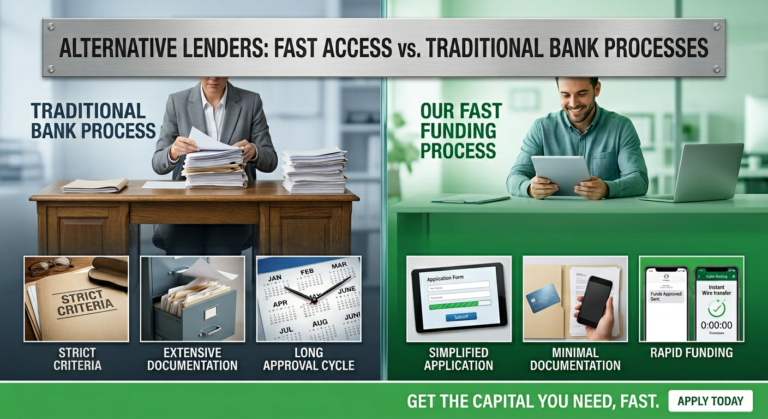

Short-term business finance has long been viewed as a safety valve: a way to ease cash flow pressure, cover a payment cycle, or manage an unexpected outgoing. But for medium-sized British businesses, it has become something more valuable — a strategic tool for pursuing growth as the pace of opportunity increases.
Traditional credit remains slow and inconsistent. The latest UK Finance Business Finance Review shows lending to mid-market firms falling, even as demand for investment capital rises. And this is restricting growth across sectors.
When momentum builds, timing becomes everything. And timing is precisely where traditional lenders struggle. Weeks can drift into months. Deals stall. Suppliers lose patience. Competitors move faster. That’s why short-term finance – including bridging loans – has shifted from a back-office necessity to a strategic advantage.

Why short-term finance now matters
Mid-sized firms are often rich in operational momentum but constrained by timing. Revenue is reliable, margins are healthy, and customer demand is clear. Yet capital is needed faster than traditional lenders can respond.
Short-term loans typically provide capital for periods from three to eighteen months. They can be used to smooth seasonal cycles, fund working capital, bridge to longer-term refinancing, support acquisitions, or secure market momentum before a competitor steps in. For CFOs, the value lies not simply in speed but in keeping other options open: capital that allows the business to drive forward, and, if necessary, allow longer-term financing to catch up.
Bridging loans play a complementary role. They allow businesses to secure assets, complete transactions, or execute time-sensitive investments even when traditional underwriting
processes are still underway. What was once considered a niche product now supports a wide range of mid-market investment decisions.
For mid-sized firms, the value isn’t just the rapid access to capital. It’s the ability to make decisions at the moment they matter – before the window closes.
What CFOs should evaluate
Short-term borrowing must be assessed with clarity. It is typically more expensive than traditional debt, and it requires strong cash-flow visibility. But when deployed deliberately, the cost is often outweighed by the upside: the ability to protect margin, secure market share, or accelerate growth that would otherwise be delayed.The fundamentals are straightforward:
• A defined purpose
• A clear repayment route
• A timeline that aligns with operational reality
• A lender who understands how the business actually works
Short-term finance isn’t a compromise. Used well, it is a strategic lever — one that helps mid-sized firms invest in opportunity at the pace the market demands.
Get in touch to learn how we’ve provided fast, flexible funding solutions for medium-sized businesses across the UK.
Flexible Capital
Up to £3,000,000 in Business Financing
Fast, Flexible and Tailored to your needs.