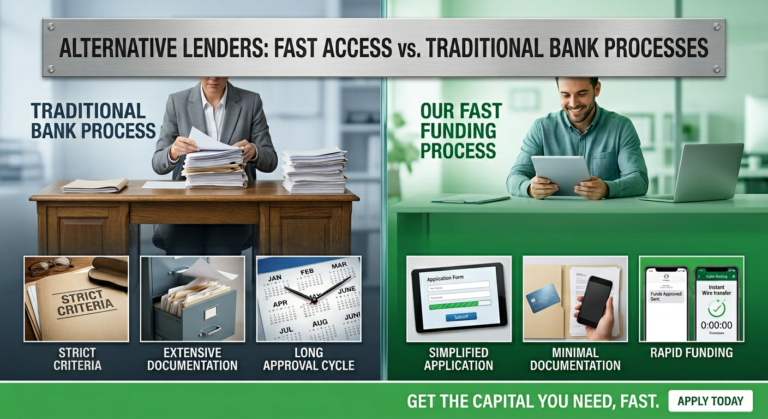

Technology has transformed the lending industry. Automated credit models can analyse financial statements, cash flow data, sector benchmarks and credit histories in seconds, enabling lenders to process applications with fewer human touchpoints.
For straightforward lending decisions, this can be effective. However, for medium-sized businesses seeking significant funding to support growth, acquisitions or investment, such automation can cause problems.
Most automated credit systems are designed to identify patterns based on historic information. They are highly effective when assessing businesses that fit established models, but less effective when a company is undergoing change. A business investing heavily in new capacity, entering a new market or preparing for an acquisition may see temporary pressure on profitability or cash flow despite having strong long-term prospects.
To an algorithm, those changes can appear as warning signs. To an experienced lender, they may represent evidence of a well-planned growth strategy.
Medium-sized businesses rarely follow a linear path. Growth often requires investment before results become visible, and strategic decisions can temporarily distort the financial indicators that automated systems rely upon most heavily.
The simple fact is that not everything that matters in a lending decision can be found in a spreadsheet.
Looking beyond the numbers
The strongest lenders have always understood that recent financial performance is only one part of the picture. Equally important is understanding the people running the business and the decisions they are making.
Two companies with similar financial profiles can present very different levels of risk depending on the quality of their leadership. A management team that has successfully navigated economic downturns, integrated acquisitions or delivered growth in competitive markets brings experience that may never appear in a set of accounts.

Similarly, a lender assessing a funding request must understand not only what a business has achieved historically, but also how it intends to achieve its future objectives. Forecasts and business plans are valuable, but they become far more meaningful when considered alongside management capability, operational expertise and market knowledge. This is where human judgement remains indispensable.
The businesses that should secure funding may not be those with the cleanest spreadsheets. They may be the ones that can clearly demonstrate how their leadership, strategy and market position will translate into future performance.
The question is: how do experienced lenders make that assessment?

What experienced lenders look for beyond the data
When evaluating a medium-sized business, experienced credit professionals are often assessing factors that sit outside traditional financial metrics.
One of the first considerations is management quality. Has the leadership team successfully managed growth before? Do they have experience operating through challenging market conditions?
Can they demonstrate a realistic understanding of both the opportunities and risks facing the business?
The second consideration is strategic coherence. Growth plans should connect logically to market conditions, operational capability and customer demand. Ambition is important, but lenders typically look for evidence that management has a credible path from investment to return.
A third factor is execution capability. A company may identify an attractive opportunity, but success depends on whether it has the resources, systems and leadership required to deliver. This becomes particularly important when funding acquisitions, entering new markets or undertaking significant capital investment programmes.
Consider a manufacturing business seeking funding to expand production capacity. Historic financial performance remains important, but it is only part of the assessment. An experienced lender will also want to understand customer demand, order visibility, operational resilience and whether management has successfully delivered similar projects in the past.

Likewise, a company pursuing an acquisition may present attractive financial projections. The more important question may be whether management has the experience and capacity to successfully integrate the acquired business.
These factors rarely fit neatly into an automated model, yet they can have a significant influence on future outcomes.
Most funding applications fail on factors that never appear in a credit report. Here’s what experienced lenders actually look for — and how to present your business accordingly.

Technology works best when combined with experience
None of this diminishes the value of technology. Advanced analytics allow lenders to process information more efficiently, identify emerging risks and make better-informed decisions. In many respects, modern lending would be impossible without these capabilities.
The most effective approach, however, combines data-driven analysis with experienced commercial judgement. Technology provides speed, consistency and analytical depth. Human expertise provides context, interpretation and a broader understanding of how businesses operate in the real world.

For medium-sized businesses, this combination is particularly valuable because their funding requirements are often shaped by circumstances that extend beyond historic financial performance alone. Growth opportunities, market shifts, acquisitions and investment programmes all require a level of assessment that goes beyond what an algorithm can easily evaluate.
The enduring value of judgement
As artificial intelligence continues to evolve, automated decision-making will undoubtedly become more sophisticated. Yet lending remains fundamentally about assessing businesses, strategies and people.
At CAPEDGE, we believe the strongest lending decisions combine rigorous analysis with commercial experience. Data helps inform the conversation, but understanding the people behind a business, the quality of its leadership and the credibility of its plans remains essential.
For medium-sized companies pursuing growth, that balance between technology and judgement can make all the difference.
That’s why, when you contact us to discuss finance, you’ll speak to a specialist who will take the time to understand your business.