
Access to capital shouldn’t be a barrier for healthy, growing UK companies, yet it often is. Even profitable, well-run mid-sized businesses can find themselves stalled for want of timely credit. So, what’s going wrong and what can CFOs do about it?
Agility can be tough for traditional banks
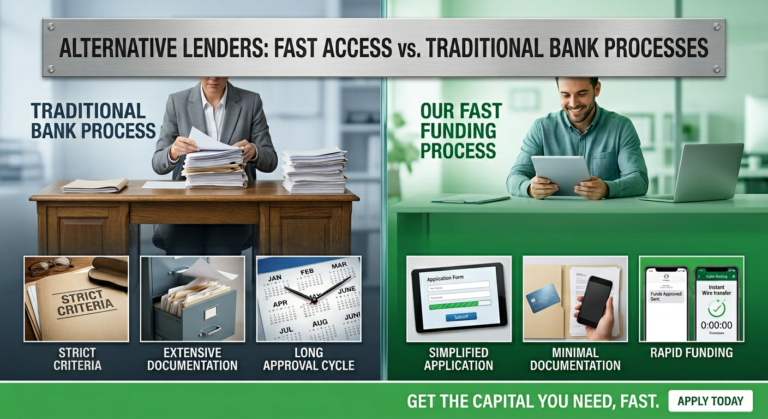
Traditional banks dominate commercial lending in the UK, yet their processes are often out of step with the needs of modern businesses. Credit committees and internal processes can delay decisions for weeks or months.
For many mid-market businesses, a complex committee process can turn an urgent capital requirement – to secure a supply contract, finalise an acquisition or expand into a new region – into a missed opportunity.
This is part of a funding landscape in which the latest UK Finance Business Finance Review reports a “slowdown in new loan approvals, particularly for medium-sized businesses”. It describes a continuing pattern of “softer approvals” for mid-cap firms, underscoring that banks are failing to meet this market’s needs.
Strong fundamentals aren’t always enough
A business can be growing, profitable, and strategically sound yet still fall short of conservative thresholds for collateral, sector risk scores, or historical reporting. Banks often prioritise balance-sheet strength over future earnings potential, which can unfairly penalise companies on growth curves.
A significant proportion of viable UK businesses either don’t get the finance they seek or never apply because they expect rejection. That’s according to research conducted in 2025 by the British Business Bank, which found that many SMEs recognised they had underinvested but struggled to secure appropriate financing. The data also showed that UK firms were increasingly turning away from the big banks.
“The diversity of supply of finance, in terms of both product and provider, is an important factor in meeting the diverse needs of the UK’s highly varied smaller business community,” said Louis Taylor, CEO, British Business Bank.

Quality is not the issue
A common misconception is that non-bank lenders step in only where quality is lacking. In practice, many solid companies that fail to secure timely credit do so because of timing and fixed assessment criteria, rather than creditworthiness.
Bank approval cycles can run into weeks or months, while market opportunities – customer tenders, inventory discounts, seasonal demand – can materialise and dissipate within days.
Non-bank lenders complement traditional finance
For mid-market businesses, the financial cost of capital is only part of the equation. The opportunity cost of waiting – losing a contract, missing a strategic hire, failing to lock in supply terms – can be critical. Time-sensitive strategies require lenders who can match the pace of business.
This is where the divide between bank and non-bank financing becomes most visible. Alternative lenders optimise decision speed, product fit and responsiveness to real-time business dynamics.
It’s important to note that non-bank lenders aren’t a lesser class of capital – they are different. Alternative finance products range from asset-based lending to revenue-aware credit decisions using up-to-date cash-flow data. These structures are designed to match the realities of modern business cycles.
How CAPEDGE is different
At CAPEDGE, we understand that opportunity doesn’t wait. A slow “yes,” an inflexible product, or a lender that doesn’t grasp the pressures of the mid-market can mean missing windows that may never open again.
We offer tailored, flexible capital solutions that bridge timing gaps without compromising quality. Our approach focuses on the reality of your business – cash flows, growth plans and market momentum – so you get capital when and how you need it.
Whether you’re scaling, restructuring or seizing a strategic moment, CAPEDGE stands alongside you with speed and expertise that traditional lending often can’t match.
If you’re struggling to access fast business funding, or need greater flexibility, get in touch today!